One car carries a full load without visibly squatting, while another settles lower at the rear. Some vehicles can even raise themselves for clearance or drop down for a particular driving condition. Air suspension is often what makes those tricks possible.
Does that make it better than coil springs? That depends on what you want from the vehicle and what you're prepared to maintain. Air suspension adds useful flexibility, but it also adds parts and repair needs that a conventional spring system doesn't have.
Air Springs And Coil Springs Support The Vehicle Differently
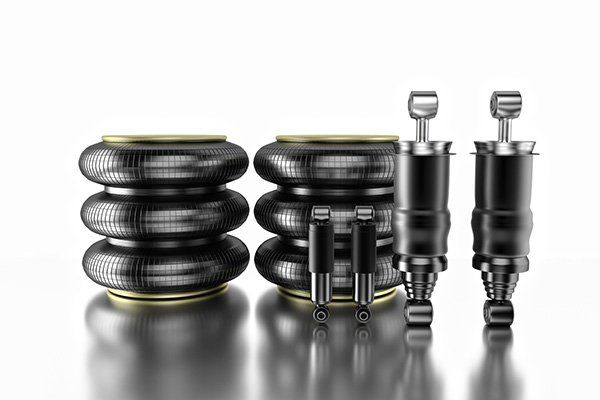
A coil spring supports the vehicle through the resistance of its steel construction. An air spring uses pressurized air inside a reinforced, flexible chamber. By managing air pressure and volume within the system's design, the vehicle can carry its load at a controlled height.
Both types still need dampers, often called shocks or struts, to control repeated movement. A spring holds up the weight, and a damper helps control how the suspension moves after a bump. Air springs and adaptive dampers are separate technologies, even when a vehicle pairs them. Adding air suspension doesn't make every damper electronically adjustable.
Air Suspension Can Maintain Ride Height Under Load
A load-leveling system uses height information to adjust the air springs when passengers or cargo change the vehicle's stance. Holding the intended ride height helps preserve the geometry and clearance the suspension was designed around. That's a handy feature for vehicles that regularly carry different loads.
Leveling doesn't raise the vehicle's rated payload or towing capacity. A vehicle can look perfectly level and still be overloaded, so follow its weight ratings and the manufacturer's loading instructions. The air suspension manages height within the system's limits. It doesn't add strength to the brakes, tires, axles, or anything else.
Adjustable Air Suspension Height Can Suit Different Conditions
Some systems offer selectable heights for loading, rough terrain, or particular road speeds. Raising the vehicle can give you extra clearance within its designed range. Lowering may make getting in or loading easier, or support the vehicle's intended behavior in a certain operating condition.
Those settings come with restrictions. Height changes may be unavailable above certain speeds or during a fault, and raised settings aren't meant for every situation, so read the manual before you use them. Extra height changes the vehicle's stance, but it can't guarantee clearance over an obstacle or replace careful driving on a damaged road.
Air Suspension Comfort Depends On The Entire Vehicle
Air springs give designers more options for managing load and ride characteristics. Their behavior works together with damper settings, suspension geometry, tires, and body construction. A vehicle can ride comfortably on either air or coil springs when those parts match well.
So the air suspension label doesn't guarantee that one car will feel smoother than another. Large wheels, low-profile tires, worn dampers, or incorrect pressures can change the experience a lot. If the ride turns harsh or bouncy after feeling normal, look for something that changed instead of blaming the system's design.
Air Suspension Adds Components That Need Inspection
Besides the springs, an air system can include a compressor, air lines, valve blocks, sensors, and electronic controls. A leak can lower one corner or make the compressor work harder and more often. A sensor or control fault can cause height problems even when the air spring itself is sound.
If you replace the compressor without finding an ongoing leak, the new part can end up with the same punishing workload. A useful inspection checks what the system is commanding and where pressure or height is being lost. Fiddling with height settings over and over isn't a repair. You have to establish the cause before choosing which component to replace.
Air Suspension Warning Signs Should Be Checked Early
A corner that drops while parked, a compressor that runs more than it should, a height warning, or an obvious lean all deserve attention. These clues help direct the inspection, but they don't prove that every air spring or electronic component needs replacing.
Useful details about an air suspension concern include:
- Which corner changes height and how long the vehicle has been parked.
- Whether the compressor runs more often than it used to.
- Any warnings or trouble selecting the normal ride height.
Follow the operating restrictions in the manual, and don't drive a severely lowered or unstable vehicle.
Choosing Air Suspension Or Coil Springs Involves Upkeep
Air suspension can be worth it when adjustable height and leveling suit how you use the vehicle. Coil springs are the simpler setup, with fewer air-system parts. Neither one gets you out of damper, joint, tire, and alignment care, so think about the condition of the whole vehicle.
If you're buying a used car, check how the suspension operates and review its service history instead of judging it by the feature list alone. Converting a factory air system to coils can affect warning systems, ride height, handling, and other vehicle functions. Any proposed conversion needs a careful look at compatibility and consequences. It isn't a universal cheap fix.
Get Air Suspension Inspection In Grand Rapids, MI, With Grand Rapids Motorcar
Grand Rapids Motorcar in Grand Rapids, MI, can inspect ride-height changes, suspension warnings, and new ride concerns. We can explain the condition of your air suspension and related components, so you understand your maintenance or repair options.
Contact us to schedule an inspection of your vehicle's air suspension concerns.